
Trade Wars: How Tariffs Are Impacting The Interior Design World
Tariffs, tariffs, and more tariffs—seems like that’s all anyone is talking about these days. Now, I don’t usually get political on my blog, but these tariffs are directly impacting the interior design world (aka my world). So, I thought I’d share my thoughts and give you some insight into how they’re affecting the industry.
Ever since these tariffs were proposed, I’ve been getting messages from various home goods vendors—some saying they’ll keep their prices steady, while others warn that price increases are inevitable. I’ll insert a notice I received from one of the vendors (keeping the vendor confidential) I work with, to give you a better idea of what’s happening behind the scenes.
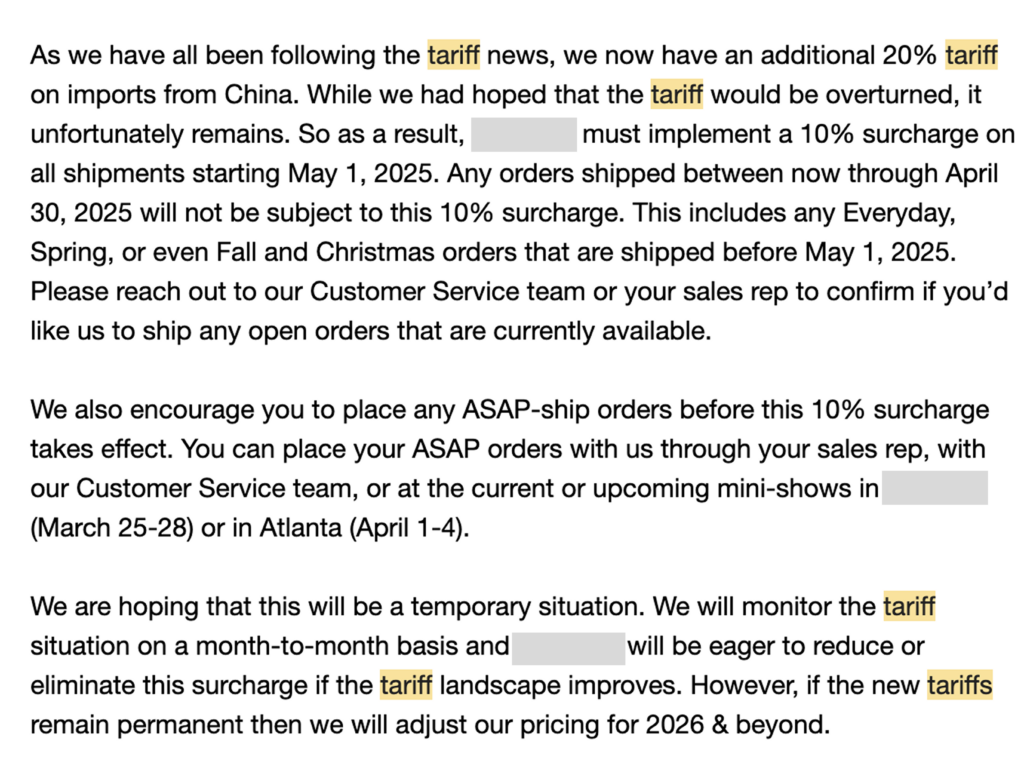
So, yeah…it ain’t looking pretty, and I had to pay my first tariff! What do you know, the tariffs are really on.

Only came out to $2.40. But, still.
My real concern? Well, furniture and home goods are already expensive as heck. Now, with these tariffs, prices are only going to climb higher, making my job harder and making it even tougher for people to create homes they love.
Honestly, it feels like we just can’t have nice things anymore.
Let’s dig a little deeper into these tariffs and how they’ll impact the interior design industry.

AVOID COSTLY (AND UGLY) DESIGN MISTAKES

The Real Impact Of Tariffs On The Interior Design Industry

The Rising Costs of Imported Goods
Tariffs—essentially taxes on imported goods—have led to a significant increase in the cost of materials and furnishings. Countries imposing tariffs on key exports have created price surges in:
- Furniture – Many high-end furniture brands manufacture their products overseas, particularly in China, Vietnam, and Europe. Tariffs on wood, metal, and upholstery materials have resulted in higher retail prices for consumers.
- Textiles & Fabrics – Designers who source luxurious fabrics like silk, linen, and velvet from abroad now face added costs, making it harder to offer premium materials at competitive prices.
- Lighting & Fixtures – Many lighting and decor elements are produced overseas, particularly in Asia. Tariffs have inflated prices on chandeliers, pendant lights, and decorative fixtures, limiting design choices.

With these cost increases, both interior designers and their clients are forced to either absorb the extra expense or seek alternative solutions.
Supply Chain Delays and Project Disruptions
Beyond rising prices, trade restrictions have led to longer lead times for furniture and decor. Supply chain disruptions, shipping delays, and raw material shortages have made it difficult to maintain project timelines. Designers now have to adjust their strategies by:
- Sourcing domestically – More designers are turning to local artisans, small-batch manufacturers, and vintage furniture to avoid international shipping issues. Which can be considered a win.
- Planning further in advance – To accommodate delays, many designers are advising clients to order key pieces months ahead of their expected installation dates.
- Offering alternatives – When a particular imported material becomes too expensive or unavailable, designers must pivot to similar but more accessible options.
Shifting Consumer Preferences

As tariffs drive up prices, consumers are adjusting their spending habits. Some key trends emerging in response to the trade war include:
- A Rise in Sustainable and Local Sourcing – Many consumers are becoming more open to locally made, eco-friendly options, helping to boost small businesses and domestic craftsmanship.
- Minimalist and Multi-Functional Design – With higher costs, consumers are prioritizing quality over quantity, investing in fewer but well-made, versatile pieces.
- Increased Interest in DIY and Upcycling – To cut costs, more homeowners are exploring do-it-yourself projects, repurposing old furniture, and embracing vintage finds.
How I Think These Tariffs Will Change Consumer Habits
Well, I think these tariffs have made buyers more aware of their sourcing choices. As a Canadian, I can see more people looking to buy from Canadian sources. However, I have to admit that this shift will limit designers like me—as well as the everyday consumer.
The interior design industry in the U.S. is significantly larger than in Canada. In 2024, the U.S. interior design market was valued at approximately $27.3 billion, while Canada’s market was valued at about $4.57 billion. This means the U.S. market is nearly six times the size of Canada’s. Simply put, there are far more materials and options available from the U.S. market. Avoiding purchasing from the US market results in limitations, it will become more challenging for me—or anyone—to fully achieve their vision for a space.
Read more here: IBISWorld – U.S. Interior Designers Industry Report
Can The Canadian Interior Design Industry Compete?
As I mentioned, Canada’s interior design market is significantly smaller than its U.S. counterpart. While Canada’s market is growing, it still faces challenges due to fewer material options and a smaller pool of suppliers. However, with a rising demand for local sourcing and a shift toward sustainability, there is potential for Canada’s interior design industry to catch up. By embracing innovation, local talent, and adapting to global trends, Canada could see its market expand, but it may take time for it to match the scale of the U.S. market.
Furthermore, I think we’re going to see a shift toward minimalism. People will likely become more mindful of their spending, especially as times get even tougher. Furniture and home goods may start to feel more like luxury purchases rather than everyday necessities. This means homeowners will have to be more intentional with their spaces, making thoughtful and strategic choices.
On the flip side, I also think people will start getting more creative. We’ll see a rise in furniture flipping, repurposing, and sourcing from secondhand platforms like Facebook Marketplace to find great deals. The days of impulse home decor shopping might slow down, giving way to a more resourceful and sustainable approach to interior design.
Is All Hope Lost – Are Tariffs Here To Stay?
The interior design industry is feeling the squeeze as tariffs drive up the cost of furniture, home decor, and raw materials. With limited access to affordable, high-quality imports, designers and homeowners alike are being forced to rethink their approach. Will tariffs reshape the industry permanently, pushing us toward local sourcing and minimalism? Or is there hope for a shift in trade policies? Well, I don’t know. I think we’ll have to wait and see… Fingers crossed that things move in a positive direction for the U.S., Canada, and consumers worldwide. The last thing I want is for interior design to become even less accessible.
Click Here To Shop My Favourite Home Goods
Let’s design your space together, virtually.





Your blog is a ray of sunshine in a sometimes dark and dreary world Thank you for spreading positivity and light
Your writing has a way of making complicated topics easier to understand It’s evident how much research and effort goes into each post
Your passion for what you do shines through in every post It’s truly inspiring to see someone doing what they love and excelling at it